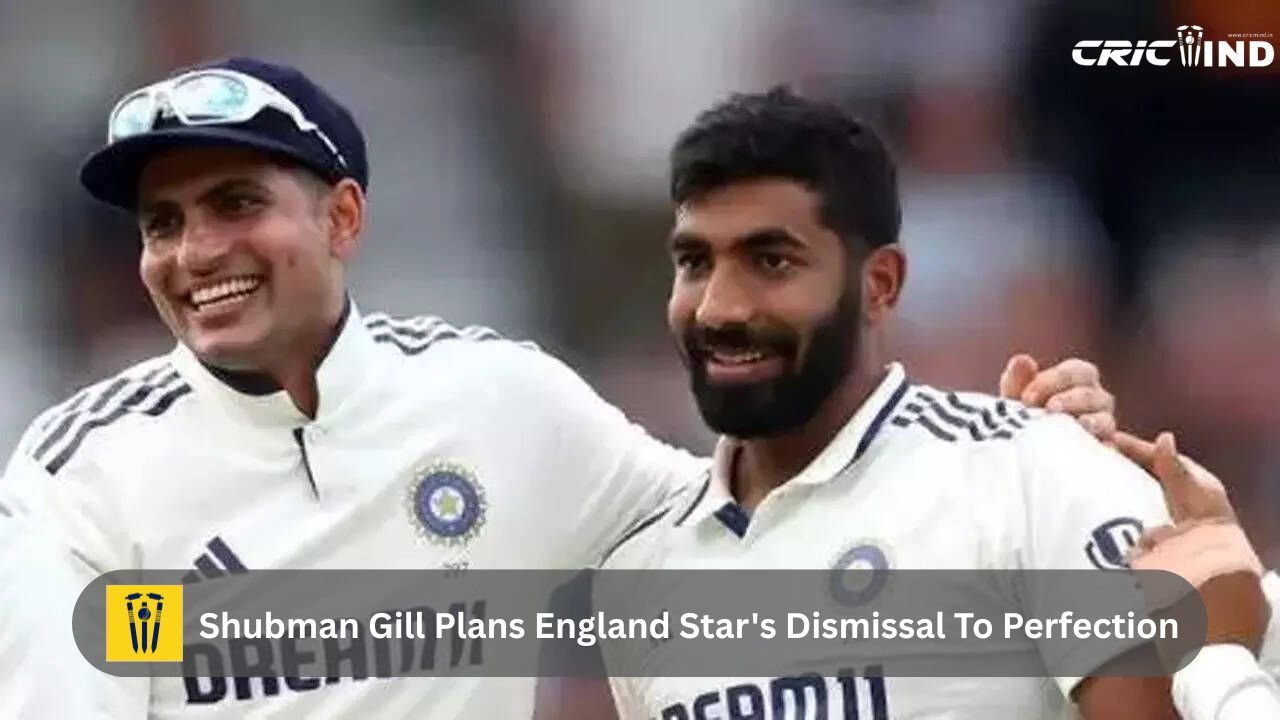
Shubman Gill’s Perfect Plan Leads to Jamie Smith’s Dismissal, Impressing Experts
Shubman Gill’s burgeoning leadership skills were on full display on Day 3 of the first Test between India and England, as his meticulously crafted plan to dismiss England batter Jamie Smith worked to absolute perfection, drawing widespread praise from cricketing experts. This strategic masterstroke provided the first significant glimpse of Shubman Gill’s captaincy prowess in Test cricket, leaving a lasting impression on commentators and fans alike.
The Mastermind Behind the Dismissal: Gill’s Unwavering Strategy
Shubman Gill had devised a clear and unwavering strategy targeting England’s wicket-keeper batsman Jamie Smith, with paceman Prasidh Krishna as the primary executor. The plan involved setting a leg-side heavy field, deliberately inviting Smith to play the short ball. What was remarkable was Shubman Gill’s unwavering commitment to this strategy, even after Smith initially pulled Krishna for a six in the very same over. This steadfastness ultimately paid rich dividends, as Krishna secured Smith’s wicket in that crucial over.
The field setting was a testament to Shubman Gill’s astute cricketing mind. He strategically positioned arguably India’s finest fielder, Ravindra Jadeja, at deep mid-wicket. Complementing this, he packed the leg-side with additional fielders, including debutant B Sai Sudharsan at deep square-leg. The explicit instruction to Prasidh was to bowl short to Smith, coaxing him into hitting towards these strategically placed fielders on the leg-side.
Flawless Execution: Teamwork in the Outfield
Despite Smith connecting well and dispatching one short delivery for a maximum, Shubman Gill remained resolute, refusing to deviate from the pre-planned tactic. His persistence was soon rewarded. Jamie Smith, confident after his earlier boundary, attempted the same shot. This time, however, he failed to connect cleanly.
The dismissal itself was a moment of sheer brilliance, showcasing not only the effectiveness of Shubman Gill’s plan but also exceptional teamwork in the outfield. Ravindra Jadeja initially caught the ball, exhibiting incredible athleticism while running square, but lost his balance perilously close to the boundary ropes. It was at this precise moment that Shubman Gill’s strategy proved its worth even further. Sai Sudharsan, demonstrating superb anticipation and agility, emerged just in time for Jadeja to execute a flawless relay throw, completing a magnificent team catch. This collaborative effort was a prime example of a plan coming together seamlessly, from the initial tactical setup to the execution in the field.
Expert Praise for Gill’s Tactical Acumen
India’s well-executed plan received high accolades from seasoned cricket commentators and former England captains, Nasser Hussain and Michael Atherton, who were effusive in their praise from the commentary box. Michael Atherton succinctly remarked on-air, “The plan has worked for India,” acknowledging the success of the strategic move. Nasser Hussain, with his characteristic wit, quipped, “Don’t you love it when a plan comes together,” perfectly capturing the satisfaction of witnessing a tactical gamble pay off. Their recognition of Shubman Gill’s decision-making underscores the impact of this particular dismissal in the context of the match.
Beyond the Dismissal: Match Context and Gill’s Growing Influence
While Prasidh Krishna successfully removed Jamie Smith (40 off 52 balls) and also claimed the prized wicket of Harry Brook (99 off 112 balls) with the short ball, his bowling tactic did come at a cost. He proved expensive, conceding 128 runs in 20 overs, indicating a need for better control despite the wickets. Nevertheless, his three wickets on Day 3, which also included the early dismissal of Ollie Pope, were crucial breakthroughs for India.
Earlier in the innings, Harry Brook, after receiving two lifelines, ran out of luck on 99 before Jasprit Bumrah completed a well-deserved five-wicket haul, ensuring a slender six-run first-innings lead for India. England was eventually bowled out for 465 in an extended afternoon session on Day 3. Prior to Bumrah castling Josh Tongue to conclude England’s innings, Chris Woakes (38 off 55 balls) had punished a somewhat predictable Indian pace attack, bringing his team tantalizingly close to India’s first-innings total of 471. England’s defiant tailenders effectively negated India’s initial advantage, setting the stage for a compelling contest hinged on the third and fourth innings. Shubman Gill’s early captaincy decision, leading to Smith’s dismissal, provided a vital moment of control for India amidst the fluctuating fortunes of the match. His ability to read the game and implement effective strategies will be crucial as he continues to lead the Indian Test team.
For more updates, follow Cricmind on Facebook, Instagram, X (Twitter), and YouTube.